Saturday, 4 May 2019

IT IS THE LORD


HOMILY FOR THE THIRD SUNDAY OF EASTER
Rev. Fr. Ezekoka Peter Onyekachi

The Gospel (John 21:1-19) is the story of the third appearance of Jesus to his disciples. In order to appreciate better the significance of this third appearance, we need to refresh our minds of the first and second appearances. John started his account of the resurrection of Jesus by telling the story of the empty tomb, where Peter and John who had ran to the tomb on account of the story of Mary Magdalene discovered that it was really empty. After this discovery, and as the men went home, John tells us that Mary stood outside and then had to peep inside the tomb. She saw two angels who asked her why she was weeping, but then on turning round, she saw a man who she would later discover to be Jesus. Off she went to the disciples with the announcement: I have seen the Lord. This is the first appearance. The second is the story of Jesus’ appearance to the disciples in a closed room (the Gospel of the previous Sunday), where Thomas who doubted later on believed with the great profession of faith: my Lord and my God. And now, we encounter the third story of the apparitions, where Jesus appeared to seven disciples in the open place, at the sea of Tiberias, and where the disciples whom Jesus loved (John) discovered it was Jesus and then told Peter: It is the Lord. This means that these stories of the appearances all came with a sort of profession of the messiahship of Jesus which was the intention John had for the readers; that anyone who read the Gospel would discover Jesus as the Lord. As the first appearance was to the woman, the second was to the disciples in a closed room, and the third was to some disciples in an open place. All these appearances started with a sort of irrecognition and disbelief. The woman did not recognize it was the Lord -Thomas did not believe it was the Lord -the disciples did not recognize it was Jesus. And now, the scene has changed from the phobia in the closed room in Jerusalem to the occupation in the open air at the sea of Tiberias.

The Gospel of John in its entirety has been known as the gospel of signs and symbols, with great theological and ecclesiological relevance. And now, we can start imagining the meanings underneath the numerous signs, numbers and symbols in the gospel of today. There are three logical parts of this gospel: the miraculous catch of fish, the meal on the shore and the appointment of Peter as the head. The details of these parts abound with symbolic meanings for the Church today.

First Part: The number of the disciples that went fishing were seven in number which makes for a full number who had failed to appreciate the spirit and the mission they had received in the second appearance. Peter had lured them into going fishing; into going back to the previous occupation. And the disciples had failed to understand their new vocation based on the spirit and the empowerment they received in the closed room. Of course, they laboured in vain, and acting on their own, they caught nothing. They left the great commission their master had given them, and had to face now weariness and emptiness as a result of the exhaustion from a job that yielded nothing. Just after daybreak, Jesus appeared on the shore and even though they did not recognize him, showed them the right place to cast their nets: cast the net to the right side of the boat and you will catch something. With the execution of this direction, they hauled in a great number of fish. The empty net became filled up. The nothingness of their occupation turned into abundance. The Lord’s presence is a great insurance for abundance.

The great number of fish caught was 153, and even though they were so many, the net was not torn. There have been many interpretations of this number, but most likely, it might have been a reference to the number of species of fish then classified. This would signify the mission of the Church to all nations, to all races, and to all human species. That net that was not torn would mean the sign of unity in a community of diverse cultures and races. Yes, the net could contain all the species, just as the Church should contain and embrace all races. In the face of this miraculous catch, John’s eye was opened to recognize Jesus. It is the Lord, he said. As Peter heard this, he put on some clothes and jumped into the lake. Peter had repeated the reaction of Adam and Eve when God came to them in Gen. 3:8. He had now realized his nakedness and sinfulness and having clothed himself would rise from the lake to be forgiven in the Eucharistic meal and then to face his divine election as the shepherd of all.

Second Part: Jesus invites his disciples to meal. Come and have breakfast, he said. Jesus had noticed that they had laboured heavily through the night, and had prepared a meal of bread and fish cooking on the fire for them (grace). They saw this when they came ashore, and Jesus still told them to bring some of the fish they had caught (human effort). The mission of the Church would be a combination of divine grace and human effort. He prepares a banquet for us, but it does not make us not to contribute when partaking of the meal. He invites us in the Eucharistic meal, as we make an offering as partakers of that communion. Jesus took the bread and gave it to them is a clear sign of the Eucharistic meal. He did same with the fish. Fish would become a secret but great sign for the persecuted Christians. The word for Fish in Greek was ICHTHYS which was made up of the first letters in Greek for Iesous Christos, Theou Yios, Soter (Jesus Christ, the Son of God, our Saviour). Thus, the presence of fish in this story remains still a profession of Jesus as the Lord.

Third Part: Jesus appoints Peter as the shepherd of the lambs. Peter’s profile in the story corresponds to his pre-eminence in the Christian mission and Church. He was the one who entered the boat as the captain and pulled the net to the shore where Christ stood. He would be ready to pull the Church towards Christ by testifying to the risen Lord, abandon his will to the will of the master. However, the charcoal fire on the shore connects the story to the denial of Peter, which happened when he had gone to another charcoal fire to warm himself (cf. John 18:25). Three times, Peter denied Jesus. And now, in the daybreak of Easter, he would undo those denials in the healing effect of his three affirmations of his unique love for Jesus. These three affirmations would follow three special pastoral responsibility: feed my lambs, tend my sheep, and feed my lambs. Peter’s hurt about the repetition of the three questions of Jesus regarding his love for him leaves with Peter and us today the hurt Peter caused himself for his three-times denial of Jesus and the hurt we cause ourselves when we deny Jesus today. After indicating to Peter the suffering that would come with the love he professed, Jesus at the end told him: follow me. Peter would now become the perfect follower who would go in God’s name by fighting no longer with the material sword but with the sword of the spirit (love). He would become a formidable leader who would lead by allowing himself to be led by another and willing to die for his faith in Jesus as the Lord. An instance of this is seen in the First Reading (Acts 5:27-32, 40b-41) where Peter together with other disciples spoke without fear of any provocation to the Sanhedrin about the Lordship of Christ.

Have we not now discovered that this whole story is about the ever-presence of the risen Lord in the ministry and mission of the Church, in the Eucharistic meal and in the primacy of Peter as the head of the Church? It is indeed the Lord. May be, we need to tell ourselves one last and comprehensive message of this Sunday: when we have fallen back into the old ways, and have laboured through the darkness of the night, and the nets come in empty, then we need to peer through the mists with the courage that comes from the love of God. We must see the one who stands on the shore; the one who is interested in letting us experience abundance and rest; the one who would invite us for a meal; the one who would tell us to bring what we have; the one who would demand from us to love him as he has loved us by following him. That one is Jesus Christ, the son of God our Saviour. Worthy indeed is the Lamb that was slain to receive power and riches, wisdom and strength, honour and glory and blessing (cf. Second Reading Rev. 5:11-14). Yes, It is the Lord!!! Do have a lovely week ahead. God bless you.

Saturday, 27 April 2019

WHEN MERCY FLOWS FROM A WOUNDED HEART


HOMILY FOR THE SECOND SUNDAY OF EASTER (DIVINE MERCY), YEAR C
Rev. Fr. Ezekoka Peter Onyekachi

The resurrection and the appearances of Jesus were the strongest and deepest foundation for the unity, love and peace lived and experienced by the early Christian community. Any form of unity without a solid foundation crumbles in no far time. The resurrection faith was a great propellant towards more courage and determination to spread the gospel of the risen Jesus. It was a proof that the journey of faith is not ended yet. It opens the way and shines the light for better livelihood and lifestyle. A story is told of an African Muslim who became a Christian. His friends asked: why have you become a Christian? He employed an analogy to answer this question: it’s like this. Suppose you were going down the road and suddenly the road forked in two directions, and you didn’t know which way to go; and there at the fork are two men, one dead and one alive –who would you ask which way to go? His friends replied: of course, the one that is alive. And then he continued: I was confused in my faith journey and discovered that I could only ask the direction from the one who is alive. Jesus is alive. Only he can show us the road. The dialogue of these friends could be likened to the vision of John in the Second Reading (Rev. 1:9-11a,12-13, 17-19). John felt dead and confused at the face of the great image of the son of man who touched him, calmed his fear, and then assured him that even though he was dead, he now lives for ever. The resurrection faith offers a clear and distinct understanding to the identity of Jesus, and so gives the Christian a succinct direction for his/her earthly life.

The Gospel of today (John 20:19-31) gives us a clear message of what the power of the resurrection faith could achieve in the life of the Christian. According to the story, it was most likely that the disciples continued to meet in the upper room where the last supper had been held. However, they did this in fear and thus could be likened as a gathering of confused and anxious people. They constantly locked the entrance doors. Having witnessed how brutal Jesus was killed, they were probably afraid of whose turn would come next. They met every first day of the week; and the content of such a meeting would be to pray and encourage one another, and so that no one would be vulnerable to the pranks of the Jews. As they were together, Jesus suddenly appeared in their midst and greeted them in his normal way: peace be to you. Jesus comes when we are together. He is attracted to a community of faith. It is not enough to have an individual faith. No matter how confused it may seem, there is surely more courage and experiences of faith when we are in the midst of a praying community. 

Yes, a family that prays together stays together. Praying was their bond; and thus they were living in unity. And because they were united, Jesus gave them peace. Peace is the consequence of unity. Peace does not come where there is disunity. The reward for peace is the Holy Spirit. After the peace greeting, Jesus proceeded to give them the Holy Spirit. And wherever the Spirit enters, empowerment follows. The empowerment came with the power to forgive and retain sins. The process then goes this way for a worshipping community: Unity – Peace – Holy Spirit – Empowerment, whereby their sequence flows logically. Ubi caritas, et amor, Deus ibi est (where charity and love is, God is there). The Holy Spirit is the Spirit of peace, of love and of forgiveness. The Spirit makes the divine mercy available to us. Today is the Divine Mercy Sunday; a day we are reminded of the mercy of God that cleanses us of all sins, and while making us spotless, encourages us to embrace God always to remain the pure status we have worn in Christ.

However, one of the disciples was not around. Thomas was not there during the visit of Jesus. Had it been he knew that Jesus would come that day, he would have been there. We must be aware that whenever we are not where we ought to be, we run the risk of denying ourselves certain privileges and opportunities. It is better to be the direct recipients of God’s favours than to partake in the favours of others. We must be carriers of anointing ourselves. Constant presence matters a lot. We need to be present in the Church always, and not merely hearing from others how lovely the worship was.  When Thomas was told about the visit of the resurrected Jesus, he doubted. Jesus visited the second time, and challenged Thomas to touch him. Then came the greatest confession of faith by Thomas, My Lord and my God. Experiencing Christ has to make us move beyond doubts into a solid faith. Solid faith assures more unity. And more unity of faith produces more signs and wonders. In the First Reading (Acts 5:12-16), many signs and wonders were done among the people by the hands of the apostles. This attracted many people to them, and their population increased.

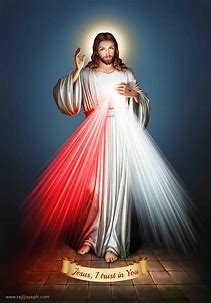
Thomas saw and believed that it was the Lord. We too in so many ways are like Thomas. We are filled with doubts in our faith. But we must recall that doubting Thomas did not stay in doubt. He became a person of solid faith and a courageous witness of the resurrection faith to many lands -in ancient Babylon, South Malaba and even to the East coast of India. And indeed, the doubt of Thomas has many positives. Apart from that great confession of faith, his zeal to feel the Lord’s wounds which are signs of love led him into teaching us that Jesus can only be recognized by his wounds. It is only when we see the wounds of Jesus that we could contemplate the boundless love flowing from his heart, the heart of mercy and the heart that beats for each one of us. Thus, the ‘mine’ in the great confession and this zeal to feel the wounds amount to a sort of love story. The Divine Mercy Sunday reminds us of this love story and our love story in Christ. This love story is summarized in beholding the wounds of Jesus in which lies the source of forgiveness and mercy. And we need to remind ourselves daily that Jesus entrusted to his apostles this gift of forgiving sins, a gift that flows from his heart. His heart was wounded that we might be healed. This heart has given us every sanctification that we need. Oh, blood and water which gushed forth from the heart of Jesus as a fount of mercy for us, we trust in you. Happy Divine Mercy Sunday. God bless you. 


Saturday, 20 April 2019

EASTER GLORY FILLS THE SKY


HOMILY FOR THE SOLENITY OF THE RESURRECTION OF THE LORD
Rev. Fr. Ezekoka Peter Onyekachi

That body is no longer in the tomb. We are saved. Our lives have escaped like a bird from the snare of the fowler (Psalm 127:7).  Christ is now resurrected. His body is no longer like ours. This body now enjoys incorruptibility (he cannot experience decay), impassibility (he cannot feel pains again), ubiquity (he is everywhere), agility ( he does not suffer from weakness again), subtility (he can move without restrictions). Jesus has won. The Sequence rightly states it: death and life were locked in a unique struggle. Life’s captain died; now he reigns, never more to die.  

According to the Gospel (John 20:1-9), It was actually on the first day of the week that Mary had gone to the tomb in the early hours of the morning, but discovered that the stone had been rolled away. She hurriedly ran back to inform Peter and John about the experience. Mary was sure of one thing: the stone was rolled away. But she however thought that someone must have gone in there and stolen the body of Christ. In anxiety, Peter and the unnamed disciple (probably John) ran to witness this. When the two finally reached the tomb, they confirmed the story of the woman and even went an extra mile in entering the tomb. Their discovery was that Christ was no longer in there. However, at this moment, their minds were still ignorant of the fact that Christ had risen. They had only confirmed that the tomb was really empty.

We are then left to imagine the numerous thoughts that ran through their minds about the empty tomb. These thoughts would continue in them until the appearance of Christ to all of them in the evening (cf. John 20:18-23). Now, imagine a scenario where the guards were ready and had their weapons to ward off any intruder who might come to steal the body of Jesus. And suddenly, they were startled in the darkness of the morning by a vision of angels descending to the tomb and rolling away the stone. They could not fight again. They became weakened by the omnipotence of God. Of course, what is left for them is to take to their heels at this vision of the supernatural power of God (cf. Mtt. 28:2-4). Nothing whatsoever can stop God whenever the accomplishment of his will reaches. This is how nothing can stop his plan for us, for He knows the plans he has for us, to prosper us and never to harm us; to give us hope and a future (cf. Jer. 29:11).

His first plan for us is to make us experience the power of the resurrection. St. Peter, the pre-eminent preacher of the empty tomb certifies in the First Reading (Acts 10:34a,37-43) that Christ had risen from the dead.  In this narration, Peter transcends the fear that Mary Magdalene had when she saw the empty tomb: that the body may have been stolen. He moves into a firm belief that the empty tomb was the work of God and a proof that Christ rose from the dead. His body was not stolen, but was risen by the power of God. The impression that Peter gives us is that the power of Christ resurrection made the disciples of Christ courageous that they are able to preach Christ openly. He added that those who believe in Him will receive the forgiveness of sins. This power is able to cleanse us from our sins. If then we have this power of grace, we must then seek that which is above (cf. St. Paul in the Second Reading -Col. 3:1-4). Christ is seated at the right hand of God. And so, anyone who beholds him will join him to appear in glory when his/her life on earth is ended. Glory awaits us.

The message of the resurrection then for us is that pains and sufferings do not endure. It can never end in suffering. There are 5Gs with which we reckon the passion and resurrection of Jesus. The first G is Gethsemane, the garden of cries, disappointments, betrayal and weeping before the arrest. The second G is Gabbatha, the place of judgement, of flogging, of denial and of ridicule. The third G is Golgotha, the place of crucifixion and death. The fourth G is the Grave; the place of burial, the location of restriction and alienation. The fifth G is Galilee, the mountain of the disciples’ meeting of Christ after the resurrection. It is synonymous with Glory, the place where the disciples were empowered to become another Christ. These five Gs represent the various stages we may encounter in our Christian life. All these stages point to the fifth stage of grace (as the number 5 in the scriptures also signified grace). Galilee is a place of glory, of vision, of power, and of a miraculous experience. When am raised up, I will go before you to Galilee (Matt. 26:26-32). He has risen from the dead, and now, He is going before you to Galilee; it is there you will see him…Go and tell my brothers, they shall see me in Galilee (cf. Matt 28:7.10).

The exact location of this meeting makes it more interesting: on a mountain. Mountains have always been known as a place of divine revelation in the scriptures. It was on the mountain that Moses encountered Yahweh. It was also on a mountain that Christ was transfigured. This time around, it is on a mountain that the disciples would be empowered. Hence, the relevance the mountain would have is that of a divine encounter. We encounter the resurrected Jesus that we might make others to encounter Him too. We are raised high to stand on a mountain that we might help to raise others. Glory is meant to be contagious. Glory is meant to be shared. Easter glory radiates and fills the sky. May this glory remain in us now and always. Amen. I WISH YOU A SPLENDID EASTER CELEBRATION. God bless you.

THE STONE HAS BEEN ROLLED AWAY

HOMILY FOR THE HOLY MASS OF THE EASTER VIGIL
Rev. Fr. Ezekoka Peter Onyekachi

Alleluia!!! He has risen. This was the message of the two men in brilliant clothes to the women that went to anoint the body of Jesus at the first sight of the dawn. Yes, the King of kings is alive. The tomb is empty. The stone has been rolled away. Oh Yes, we are happy that it never ended in death. After suffering comes glory. After death comes resurrection. After misery comes joy. The joy in our heart is unquantifiable that the saviour has risen. Since he is risen and alive, we are sure of our own resurrection and liveliness. Because He lives we profess tomorrow. Because he has conquered death, we can battle with death and conquer it. Death has no power again. The First Reading (Rom. 6:3-11) captures this defeat over death so beautifully. As Christ has been raised from the dead, we are sure of a new life. Since we imitated Him in his death, we shall also imitate him in His resurrection. This becomes a proof that our former selves have been crucified with him. This means that sin has been destroyed and we have been freed from its slavery. Death has been completely defeated. Alleluia!!!

It is indeed amazing for us what the Lord has done. In the Gospel (Luke 24:1-12), Peter felt this same amazement on discovering that the testimony of the women to the disciples was true. He ran to the tomb, and discovered it was empty. He bent down and saw the binding cloths, and went home amazed. These two realities -the empty tomb and the binding cloths- were the material evidence that Jesus was no longer in that tomb.

The tomb
The tomb was found empty because the body was no longer in it. This is the first proof of the resurrection. It was not only that the tomb was found empty, but the two men testified that he has risen, and reminded the women of his words while he was with them. The Psalmist says: for you will not leave my soul in hades nor will you suffer your holy one to see corruption (Psalm16:10). Those women may have been thinking that since the stone was rolled away, someone may have tampered with the body of Christ. But the men’s message cleared their doubts. They went to tell their testimony to the followers, but they did not believe them. Peter ran to the tomb and discovered indeed that the women’s testimony was true. The tomb was empty. Christ was no longer in there.

The significance of the tomb is that it imprisons the body and creates a gap between the living and the dead such that no sane person would desire to live in tombs while still alive. And so, the emptiness of that tomb meant freedom and reconciliation. Oh Night, truly blessed, when heaven is wedded to the earth, and man reconciled with God. The body is no longer a prisoner of death. Death no longer separates us from the living. There is now a spiritual relationship that exists between the living and dead. Death has become a passage to new life, and no longer a misfortune for the Christian. The emptiness of that tomb signifies also the emptiness of our worries. Sometimes, we may want to think about the troubles and difficulties of life in the sense of tombs that imprison us and that alienates us from others. But then again, when we remember that the Lord has rolled away that stone with which the tomb was blocked like he did for Lazarus, we are encouraged to face the uncertainties of life bravely and never to grow weak. He has rolled away the stone for us, and he has declared us free. No more slavery, no more alienation.

The Cloths
When Peter reached the tomb and entered, he saw the binding cloths. Jesus rose, but left the cloths with which he was buried. His resurrection was not a return to his previous condition of life. The buried body needed a binding cloth but the resurrected body did not need any. That resurrected body is glorious. He is no longer bound by human needs. He has gone beyond the need for cloths. The glorified body has transcended materialism and has returned humanity to her state before the fall of Adam. We must recall that before their fall, Adam and Eve needed no clothing, but still had everything they needed. The resurrected body has become impassible, incorruptible, and agile. This means that there is no more suffering, no more decay and no more weakness. In the resurrection, our bodies are transformed that there would be no more need for clothing. The clothing would become the glory of Christ. The implication of all these is that as those who are rising with Jesus, we should not return to our previous life of sin. We should do away with everything that can cause us distractions, remaining focused to our Christian calling.

The tomb could not hold Jesus. The evil powers of this world were unable to stamp out the truth of his eternal existence. There is great power in the resurrection. To experience this power that transforms the life of Christians is to live those cloths (distractions, sins, worries, discontentment) and rise with our glorified bodies. We need to pray like Paul: that I may know Christ and the power of his resurrection, and may share in his suffering, becoming like him in his death, that by any means possible I may attain the resurrection from the dead (Phil. 3:10-11). The challenge of the empty tomb is one that tells us to rise and leave those tombs and those burial linens. Why should we be complacent with those tomb-like conditions and situations? Why not grab the chance to rise with Christ? My Easter wish is that we find strength in God to resurrect from those tombs of difficulties, of worries, of disappointments, of poverty of the spirit, and of complacency in vices into the space of joy, peace, spiritual well-being and the zeal for virtues. Do not forget that the power of this holy night dispels all evil, washes guilt away, restores lost innocence, brings mourners joy; it casts out hatred, brings us peace and humbles earthly pride. Yes! He has risen, and we have risen with him. HAPPY EASTER. God bless you.


Welcome!!! We are here for your joy and wellbeing. Fr. Ezekoka prays for you.

EMBRACNG THE OPPORTUNITY OFFERED BY PENTECOST

  HOMILY FOR PENTECOST (YEAR B) Acts 2:1-11        Galatians 5:16-25        John 15:26-27; 16:12-15 Pentecost is the fiftieth day ( Πεντηκοσ...